The United States Tennis Association Ball Crew Considerations

A master of business administration in economics graduate from the University of Rochester Simon Business School, Joseph “Joe” Vessecchia is a former account executive with Quickbase, SMB Division, in Cambridge, Massachusetts. He was responsible for formulating the outbound sales strategy and engaging prospects for the Quickbase software. Joseph Vessecchia is passionate about sports, especially baseball, football, and tennis. He was a ball boy at the US Open tennis tournament from 2005 to 2008.

The ball crew refers to the attendants who run across the court to retrieve tennis balls during a match. At the US Open, ball crew members should be on the court for a minimum of 90 minutes, work four days of qualifying tournaments, and 10 days of the main draw.

There is no age limit to apply for the ball crew position. However, the responsibilities disqualify individuals with mobility issues and unfit persons generally. A typical task description requires lunging, bending, squatting, standing, and running during the match. Thus, recruiters expect that viable candidates can do these things. Other indicators that may increase your chances but not guarantee entry include tennis, baseball, and running background or experience.

The US Open coaches and supervisors recommend several practice regimens for applicants. First, rolling and catching tennis balls along a straight line toward the tennis net on the double alley line. The aim is for an applicant to keep the ball low while passing it to their partner, and catch it while squatting. Other drills include speed conditioning, agility tests, and quick sprints. Finally, service training, which entails accurately tossing balls to a person. They recommend practicing with people of different heights to simulate the US Open players.

When and Where to Run in the City

A New York City, New York resident, Joseph “Joe” Vessecchia, recently graduated with his MBA from the University of Rochester. Outside of his role as an account executive, Joseph Vessecchia enjoys running.

Running in any major metropolis can be successful with the right planning. The first thing to do is to schedule a time to run. Because cities tend to be high-traffic areas, runners might find navigating people and vehicle traffic difficult during peak times. The best times to run in the city are in the early morning (before rush hour), before lunch between 9:30 am and 11:30 am, after lunch between 1:30 pm and 3:30 pm, and after evening rush hour, which is sometime after 6:30 pm.

After figuring out when to run, runners should map out a plan of where to run. Again, some suggest avoiding busy routes to avoid turning the route into an obstacle course. Choosing areas with less vehicle and pedestrian traffic reduces the work a runner must do. In addition, it is less dangerous to run in light traffic areas.

Runners have a few resources they can go to plot their route. MapMyRun, Runkeeper, RunGo, and Strava are some apps a runner can download that will give them the best route based on their desired workout. Also, runners can join a local running club to meet up with others who have fine-tuned charting out their runs.

How Cal Ripken Broke Baseball’s Record for Consecutive Games

Joseph “Joe” Vessecchia is a graduate of the MBA program at the University of Rochester who focuses on the finance sphere. Having participated in the Woburn Men’s Baseball League, Joseph Vessecchia has an abiding interest in a sport that rewards endurance, as well as sheer athleticism.

One of the most noted records in the sport, which was held for decades, involved Yankee great Lou Gehrig playing for 2,130 consecutive games across the 1920s and 1930s. The record of the “Iron Horse” was finally surpassed on September 6, 1995, by Hall of Famer Cal Ripken Jr., who played his entire career for the Baltimore Orioles.

The streak began in Ripken’s rookie year of 1982, when he was moved from third base to shortstop by legendary manager Earl Weaver, in spite of being substantially taller than anyone in the position. He soon made the infield his own, emerging as a consummate fielder and infield captain, as well as a consistent hitter for power and average.

Ripken’s streak stayed alive through moments that other players would have taken as a signal for rest and recuperation. One example was in 1993, when a brawl between the Orioles and the Mariners that cleared the bench led to a sprained and extremely swollen knee. Unable to place weight on the knee in the morning, Ripken got treatment that somehow allowed him to take to the field by evening.

The game on which Ripken surpassed Gehrig was well attended, with his family, as well as President Bill Clinton, Joe DiMaggio, and Frank Robinson among the luminaries who cheered him on. As Ripken left the field in the 5th inning, head down and without a wave, black and orange balloons flooded a stadium that erupted into sustained applause. This led All Stars Bobby Bonilla and Rafael Palmeiro to retrieve Ripken from the dugout and encourage him to take one triumphant lap around the bases. This time Cal Ripken basked in well-deserved applause that he’d earned through years of dedication to his craft.

A Brief History of Tennis at the Olympics

An experienced software sales professional moving into the finance sector, Joseph “Joe” Vessecchia holds an MBA from the University of Rochester. Away from his professional activities, Joseph Vessecchia enjoys staying active by playing tennis.

Tennis is one of the most globalized sports on earth, with tournaments and professional players in hundreds of countries. Despite the sport’s international history and appeal, the sport has had a relatively limited run at the Summer Olympic Games.

Tennis was first featured at the inaugural modern Olympics in 1896 and remained in the program for the following six installments. During several of these early events, losing semifinalists shared bronze medals, though more commonly, these two players have faced off for the third-place medal.

The 1896 Summer Olympics in Athens featured singles and doubles tournaments for men. Each of the three doubles medalists consisted of multinational pairings. By 1912, the program had expanded to include eight events: men’s and women’s outdoor singles, men’s and mixed outdoor doubles, men’s and women’s indoor singles, and men’s and mixed indoor doubles. However, 1912 marked tennis’ last Olympic appearance until 1988.

Tennis has remained part of the Summer Olympic Games since returning to the program. The United States has won more medals than any other nation on eight occasions and leads the sports with 21 gold medals. However, Great Britain has 43 total medals, an Olympic record for the event.

Dealing with Broken Bones While Hiking

A financial professional based in New York City, Joseph Vessecchia earned his MBA from the University of Rochester. Beyond his work in finance, Joseph “Joe” Vessecchia enjoys several outdoor activities, such as playing baseball and hiking.

Hikers are encouraged to pack various safety and medical supplies, particularly if they plan a long day hike or multi-day trip. However, some accidents on the hiking trail are more severe than others. For instance, hikers may wonder what exactly they can pack in a First Aid kit to help deal with a broken bone on the trail.

Most trail injuries involve sprained ankles, but fractured and broken bones are hardly unheard of. In addition, the ankles, wrists, and ribs can be vulnerable during falls and other hiking mishaps.

Individuals who lack the proper medical training should never attempt to reset a broken bone, as the risk of further damage is too high. With this in mind, hikers should spend the immediate seconds and minutes following an accident investigating the injury and, above all else, maintaining calm heads about the situation. Hiking groups should remember that the best course of action should be decided by the rest of the party, not the person dealing with the pain and discomfort of a broken bone.

In addition to not resetting a broken bone, individuals must determine whether they can even engage with an injured hiker. For example, if a person has fallen into a barrier of mud and loose rocks, any approach risks further injury to the downed hiker and whoever is attempting to help.

The injury should be tended to as best as possible after removing any items that might hinder circulation, such as jewelry. Hikers should also provide pain management, such as ibuprofen, if possible. If the wounded hiker can place weight on the injured limb, the group should begin the return journey at once. If the person cannot move, hikers will need to use communications devices to reach out for emergency support.

The Underhand Serve in Tennis

Joseph Vessecchia is a former account executive with Quick Base in Cambridge, Massachusetts. He recently concluded a master of business administration program at the University of Rochester. Beyond his work as a sales professional and account executive, Joseph “Joe” Vessecchia enjoys staying active by playing tennis.

Players can implement different kinds of services in the sport of tennis. Slice serves, for example, move away from the returner, pulling them off court, while kick serves jump high and into the returner’s body, making it difficult to swing at the ball properly. That said, the most unique and rarely seen serve in tennis is the underhand serve.

As the name implies, the underhand serve in no way resembles the traditional tennis serve. Instead, players lightly toss the ball in front of their body, then essentially bunt the ball across the court and over the net. The point of contact occurs below the waist rather than over the head, resulting in an underhanded service motion.

So long as players adhere to all other rules governing legal serves and service motions, there is nothing illegal about the underhand serve. The most famous underhand serve came during the 1989 French Open when a young, fatigued Michael Chang used the tactic to surprise Ivan Lendl. Chang won the match and went on to win the tournament.

How CRM Can Improve Sales

CRM, which is short for customer relationship management, involves the practical strategies, methods, tools, and technologies used in customer acquisition and retention. In most cases, when business persons discuss CRM, they are referring to the CRM system. The CRM software or system is a business tool that assists companies by improving customer relationships, which inevitably boosts their productivity, especially in the area of sales. It improves the efficiency of sales teams, converting business prospects into long-term customers. If you want to reap the benefits of CRM, then you must know the best possible ways to use it. One beneficial way to use CRM to improve your business is by using it as a platform for information sharing among your sales group.

To produce excellent results in a business, the processes involved in carrying out certain activities need to be coordinated. Coordination keeps everyone on the same page – that is, every team member is kept current of all relevant information. This reduces the possibility of mistakes and wasted effort. For instance, if your company has reached out twice on a similar issue due to lack of response, it may make your company look disorganized. However, with CRM, the issue of proper coordination is easily resolved. A CRM system can track all contacts made, allowing all team members to stay apprised of exactly what others have done regarding a given potential or current customer.

Businesses can also use CRM to acquire relevant information about their customers. This is an effective function because, with the CRM system’s aid, the sales team can acquire key data from research on customer behavior on platforms such as social media. The acquired information can be used to boost sales based on the already known customer preferences. Unavoidably, there will be customers willing to purchase your company’s product and some who will not. With CRM, you can easily determine the customers most likely to do business and concentrate your resources on working to gain their attention.

Another feature of the CRM system is that it helps in rationalizing your sales moves. CRM makes it easy to outline the entire sales process. This all-encompassing view helps your team to close business deals faster. It also speeds up your team’s ability to reach set business goals. With CRM, order processing and preparing quotes are automated. Due to the automation of these processes, CRM helps lower the costs of production and improves sales revenue.

Another feature of CRM systems is that companies can merge them with their existing software to produce better results. Most businesses integrate CRM with their established business software to better coordinate departments. For instance, with CRM, you can improve your accounting software. CRM can provide such software with important contacts, account history, and company accounts discussions and suggestions. The merging of this data not only helps with an effective examination of past business trends, but also assists with providing insights into possible future developments. Additionally, having all your company’s information in one place through CRM helps lower search times, hiking productivity.

The Mental Health and Physical Benefits of Hiking

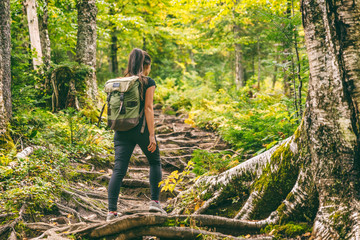
Joseph Vessecchia graduated with an MBA in finance from the University of Rochester in May 2021. He previously worked as an account executive with Quick Base Cambridge, where he was responsible for selling Quick Base software. Joseph Vessecchia enjoys the outdoors, and likes to hike as a hobby.

Research links a sedentary lifestyle with many negative health outcomes, and hiking is one way of overcoming that.

Hiking improves cardiovascular fitness, particularly if you take routes that force your heart to exert itself more such as hills or uneven surface trails. No matter the trail, hiking is an excellent whole-body workout. Hiking is a natural way of engaging your core torso muscles and hone your balancing skills.

Besides the physical benefits, spending time outdoors improves your sensory perception as it opens up your senses. Taking in the smells, sights, and nature comes with many health benefits. Spending time hiking in parks, nature preserves, and woodlands may ease your stress and anxiety levels.

The Old Rifle Range Trail in Lucien Morin Park

A seasoned sales executive, Joseph “Joe” Vessecchia is pursuing an MBA at the University of Rochester in Rochester, New York. Joseph Vessecchia counts hiking as one of his favorite hobbies.

According to the independent hiking resource All Trials, the top hike within Rochester city limits is the Old Rifle Range Trail in Lucien Morin Park. A roundtrip loop that stretches 3.1 miles, this moderately difficult trail takes roughly an hour-and-a-half for the average hiker to complete.

Positioned at the north side of Ellison Park and the southernmost point of Irondequoit Bay, Lucien Morin Park is a wetland nature area that is popular among paddlers and hikers alike. It is also a renowned birdwatching destination.

The Old Rifle Range Trail offers ample places to spot birds and other forms of wildlife. It also provides scenic views of Irondequoit Creek, which terminates in Irondequoit Bay. The Old Rifle Range Trail takes hikers through several natural environments from lakeside to wetland.

The Rite of Christian Initiation for Adults Explained

A huge crowd of pilgrims massed inside the Basilica of Guadalupe in Mexico City Mexico City, Mexico, Apr 04 - Veneration in honor of the Virgin of Guadalupe in Mexico City is among the most widespread and loved in the Catholic world. Every year millions of people visit the sanctuary of Our Lady of Guadalupe in the Cerro del Tepeyac where, as tradition tells, the Virgin Mary appeared in 1531. In the photo: Hundreds of people flock to the Basilica of Guadalupe during a religious celebration Cathedral Community stock pictures, royalty-free photos & images

Joseph “Joe” Vessecchia is a New York sales executive preparing to transition into the finance sector. Outside of the professional and educational arenas, Joseph Vessecchia is an active member of the Sacred Heart Cathedral and its Cathedral Community.

A Roman Catholic parish in Rochester, New York, the Cathedral Community reaches out to the community at large through various charity and missionary initiatives. It welcomes new adherents to the Catholic faith through its Rite of Christian Initiation for Adults (RCIA) program.

Described by the Cathedral Community as a “life-changing journey of faith,” the RCIA process occurs in four stages. It begins with the PreCatechumenate, otherwise known as the Period of Inquiry into Catholic doctrine. RCIA students then complete thorough religious instruction during the Catechumenate stage.

The next stage, Purification and Enlightenment, involves strengthening spiritual and mystical attachments and developing a genuine and intimate understanding of Christ and the Catholic church. In the last stage of the RCIA process, Mystagogia finalizes the initiation process by engendering a deep understanding of the Sacraments within the converts who have newly received them.

Design a site like this with WordPress.com
Get started